
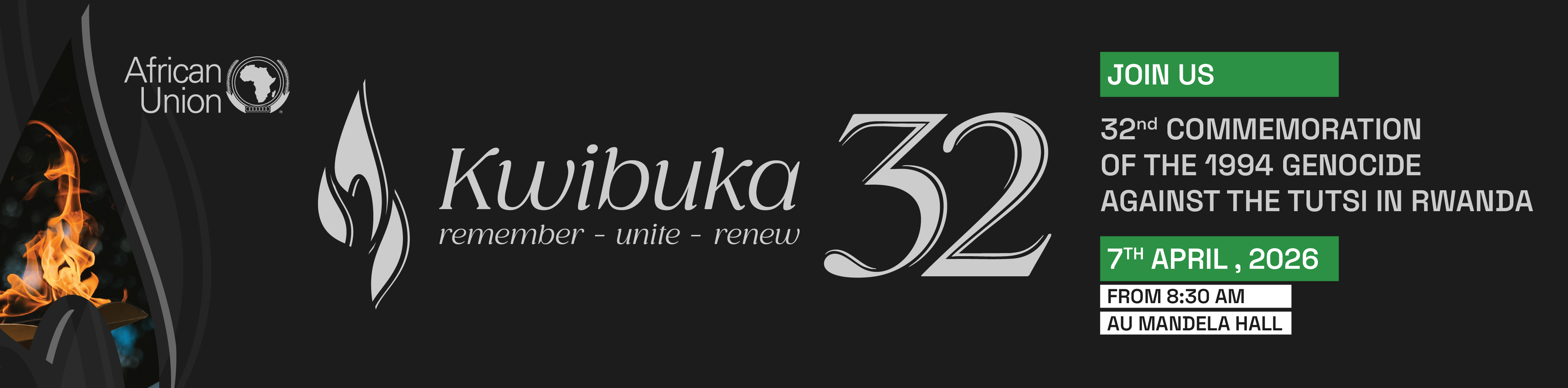
The genocide against the Tutsi in Rwanda was orchestrated by the regime of President Juvenal Habyarimana prior to 1994 and was carried out on 7th April 1994 following his death in a plane crash on 6th April 1994. Over the subsequent 100 days, the interim government systematically executed mass killings targeting the Tutsi population. Ultimately, the genocide was brought to an end by the Rwandan Patriotic Front (RPF-Inkotanyi), whose military offensive resulted in the overthrow of the genocidal regime.
The origins of the genocide trace back to Rwanda’s colonial era when first the Germans (1897-1916) and later the Belgians (1916-1962) ruled the country. During this period, colonial policies created ethnic divisions, laying the groundwork for the 1994 Genocide Against the Tutsi.
Precolonial Rwanda was a centralized state, united under a King, and characterized by a shared language, beliefs, culture, and customs. This unity contributed to its strength in the region, as evidenced by its numerous successful expansion campaigns.
Under colonial rule, particularly during the Belgian administration, the unity of precolonial Rwanda was shattered through "divide-and-rule" strategies. Racial theories were introduced, and what were once social classes were redefined as distinct ethnic groups—Hutu, Tutsi, and Twa. Christian Catholic Missionaries, working alongside the colonial authorities, played a significant role in embedding these racial theories into the population. To enforce this division, identity cards were introduced, which explicitly listed ethnic and racial affiliations.
In the 1960s, the colonial administration dismantled the monarchy and transferred power to racially-based political parties, which went on to govern Rwanda until the 1994 genocide against the Tutsi. During the First (1962-1973) and Second Republics (1973-1994), the ruling governments systematically persecuted Tutsi, subjecting them to violence, mass killings, and causing widespread displacement into neighboring countries. From the initial PARMEHUTU party of President Grégoire Kayibanda, the first president of Rwanda, to the MRND party of President Juvénal Habyarimana, who seized power through a military coup on 5 July 1973 and ruled until April 1994, Rwanda endured years of persecution, massacres, and division targeting the Tutsi population.
In 1990, the Rwandan Patriotic Front (RPF-Inkotanyi) launched a liberation struggle to compel the Rwandan government to address the refugee crisis and embrace democratic governance. In response, the MRND regime orchestrated the mass extermination of the Tutsi, branding them as RPF-Inkotanyi supporters. This culminated in the 1994 Genocide against the Tutsi, which claimed over a million lives in just 100 days. The genocide was ultimately halted on July 4, 1994, with the RPF-Inkotanyi’s military victory over the genocidal regime.
On July 19, 1994, a Government of National Unity, led by the RPF-Inkotanyi and other political parties that had not participated in the genocide, was sworn in. This marked the beginning of a new chapter in rebuilding Rwanda.
Genocide Against the Tutsi in Rwanda: Part 1 - 1897-1990
Genocide Against the Tutsi in Rwanda: Part 2 - 1990-1994
Genocide Against the Tutsi in Rwanda: Part 3 - 1994-2024